There was a time when straightening your teeth meant one thing: metal brackets, wires, and two years of avoiding popcorn. That’s no longer the only option – but a lot of people still don’t know how different the alternative really is until they sit down and compare the two properly.
So let’s actually compare them.
The Visible Difference
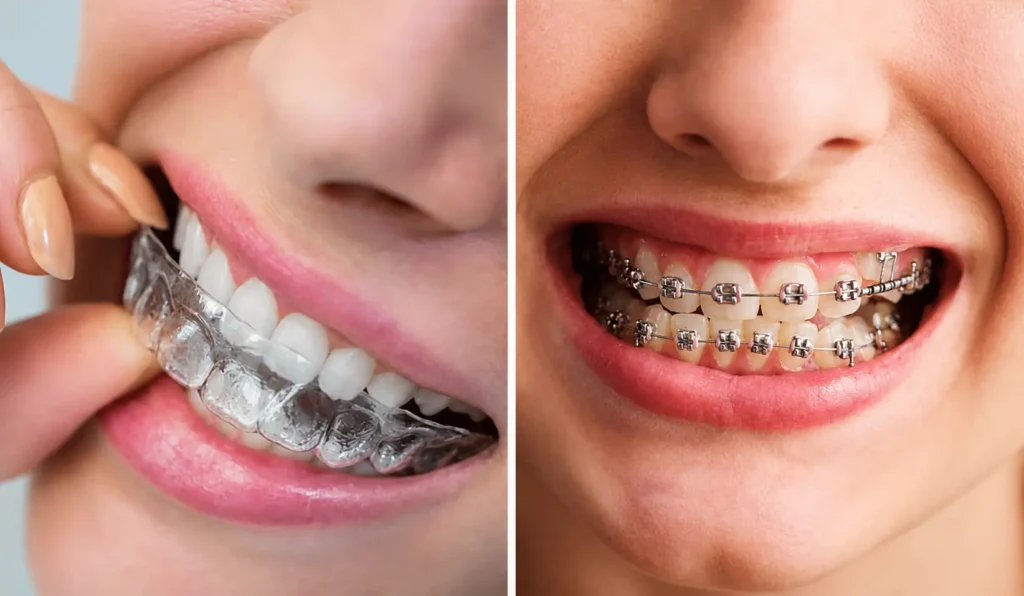
Metal braces sit on the front of your teeth for the entire length of your treatment. There’s no hiding them – every photo, every meeting, every first impression happens with a mouth full of metal.
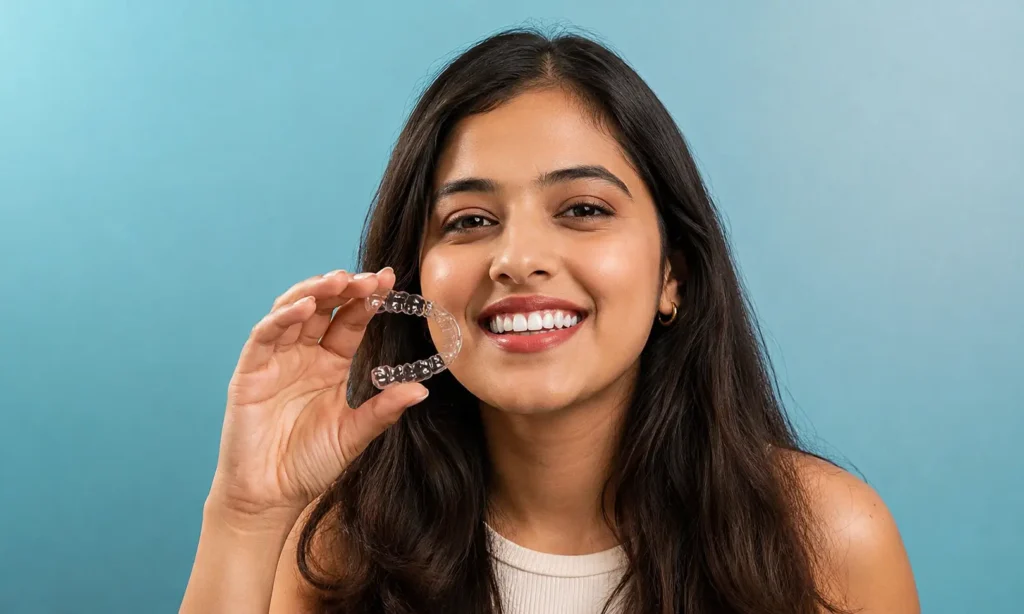
Clear aligners take a different approach entirely. They’re custom-made trays that fit snugly over your teeth and are nearly impossible to spot unless someone’s looking closely. For a lot of adults, this alone is the deciding factor. Nobody wants to explain their orthodontic timeline to a client mid-meeting.
What Your Mouth Actually Feels
Braces come with a learning curve your cheeks and gums have to survive. Brackets and wire ends catch on soft tissue, and it’s common to go through wax packets and the occasional cut, especially right after an adjustment.
Aligners don’t have that problem. They’re smooth plastic, molded to your teeth, so there’s nothing sharp to catch. You will feel some pressure when you move to a new tray in the sequence – that’s just your teeth doing what they’re supposed to do – but it’s a different kind of discomfort altogether.
Eating Isn't a Negotiation Anymore
If you’ve had braces before, you know the list: no popcorn, no hard candy, no biting straight into an apple, careful with anything sticky. It’s not a suggestion – it’s how you avoid snapping a wire or popping a bracket off.
With aligners, you just take them out before you eat. Then put them back in. That’s the entire rule. Nothing is off-limits, and brushing and flossing go back to being exactly as easy as they’ve always been.
How Predictable the Process Actually Is
Braces are adjusted in person, appointment by appointment, with your orthodontist making manual calls on tightening and movement as you go.
Aligners are mapped out before you even start. The whole treatment is planned digitally in advance, so you typically get to see a simulation of where your teeth are headed before committing to anything. Each tray in the series is built to move your teeth by a specific, small amount — which means fewer surprises along the way.
Fewer Trips Back to the Clinic
Traditional braces need tightening roughly every 3 to 4 weeks, for the entire duration of treatment. That’s a lot of appointments stacked up over a year or two.
Aligners cut that down significantly. Most of the progress happens at home – you switch to the next tray on schedule – with periodic check-ins just to confirm things are moving the way they should.
So Which One Is Actually Right for You?
Braces still make sense for certain complex bite corrections, especially cases that need more mechanical control, or younger patients whose jaws are still developing.
For most people though mild to moderate crowding, spacing issues, minor bite corrections — aligners get you there with a lot less disruption to your actual life.
We build every plan around your teeth specifically, not a generic mold. That means a custom digital treatment plan showing you what your results will look like before you commit, aligners fitted to your actual bite, and a process that works around your schedule instead of the other way around.
Where Magic Aligners Fits In